SLCN Domain Toolkit
SLCN Universal Training
Our universal provision training for Speech, Language, and Communication Needs (SLCN) emphasizes the importance of creating a language-rich environment. It includes guidance on using the Better Communication Observation Toolkit, strategies for engaging with parents and families, and practical tips for improving communication skills for all children. Additionally, it highlights statistics on the prevalence of unmet SLCN needs among school leavers, underscoring the critical need for effective intervention. This training aims to equip educators with the tools and knowledge to support every child's communication development effectively.
Talking still matters visual clips
EYFS and KS1 Observation Tool
The Better Communication Research Programme's Classroom Observation Tool is an excellent SLCN Universal Provision toolkit. It helps educators systematically identify and address speech, language, and communication needs within the classroom setting. By using this tool, you can ensure that all students receive appropriate support tailored to their individual needs, fostering a more inclusive and effective learning environment
Involving children and young people with SLCN
Developmental language disorder fact sheet
Links between communication and behaviour
Supporting looked after children
SLCN Summary Action Plan
Welcome to the SLCN Summary Action Plan page. This essential document is designed for children following the SLCN toolkit for R2i. It provides a comprehensive summary of all assessments, targets, and progress in one convenient location. This plan ensures that everyone involved is informed of the next steps, facilitating a cohesive and supportive approach to each child's development.
SLCN Universally speaking initial checklist
As part of our early identification process for Speech, Language and Communication Needs (SLCN), the Universally Speaking Checklist is used as a baseline assessment tool. This helps to highlight key areas of strength and concern in a child’s communication development, aligned with age-appropriate milestones. The checklist supports practitioners in narrowing down potential areas of need before moving into more detailed time sampling observation.
Universally speaking checklist
EAL vs SLCN screener
The EAL vs SLCN Screener is an optional but valuable tool used to help distinguish between language development needs related to English as an Additional Language (EAL) and those that may indicate underlying Speech, Language and Communication Needs (SLCN).
This screener supports informed decision-making by identifying whether a child’s communication challenges are primarily due to acquiring English or if further investigation into SLCN is warranted.
Time sampling observation
The Time Sampling Observation is used to take a closer look at specific areas of a child’s speech, language and communication development across different times and contexts. This structured method helps identify patterns in attention, listening, understanding, expressive language, and social interaction.
Following the observation, practitioners will refer to the Ages and Stages developmental booklets to determine whether the behaviours observed fall within typical developmental expectations or indicate a need for continued support within the SLCN domain.
This step ensures that decisions are developmentally informed and tailored to each child’s individual profile.
Typical Talk: A Quick Guide to Communication Milestones
This poster is a handy reference for staff to support early identification of speech, language and communication needs. It outlines what typical communication skills look like at different ages and stages, from early years through to primary age.
Use it to:
-
Refresh your understanding of age-appropriate communication milestones
-
Spot early signs of delay or difficulty
-
Support conversations with parents and colleagues
-
Inform planning and interactions across the setting
Let’s keep communication development at the heart of our everyday practice!
Ages and Stages Booklets: Universally Speaking 0-5
The Universally Speaking: Ages and Stages booklets are used alongside observations to help practitioners understand what typical speech, language and communication development looks like at different ages.
These booklets provide clear, age-specific guidance to support:
-
Interpreting observation findings
-
Identifying whether a child’s communication is within expected developmental norms
-
Deciding whether to continue monitoring, provide targeted support, or refer for further assessment within the SLCN domain
They are a key tool in making informed, developmentally appropriate decisions.
Universally speaking: ages and stages 0-5
Ages and Stages Booklets: Universally Speaking 5-11
The Universally Speaking: Ages and Stages booklets are used alongside observations to help practitioners understand what typical speech, language and communication development looks like at different ages.
These booklets provide clear, age-specific guidance to support:
-
Interpreting observation findings
-
Identifying whether a child’s communication is within expected developmental norms
-
Deciding whether to continue monitoring, provide targeted support, or refer for further assessment within the SLCN domain
They are a key tool in making informed, developmentally appropriate decisions.
Universally speaking: ages and stages 5-11
Speech sounds and developmental norms
SLCN toolkit: parent information leaflet
Family / parent SLCN questionnaire
EYFS Age Specific Screening Tool 3yr - 4yr 11 months
At this stage in the assessment process, staff have developed a clearer understanding of the child’s communication profile. The Age-Specific Screening Tool is used to build on this knowledge, offering a more detailed and structured assessment tailored to the child’s developmental stage.
This tool helps to:
-
Pinpoint specific areas of speech, language and communication need
-
Inform targeted next steps and intervention planning
-
Support evidence-based referrals if required
It ensures that support is age-appropriate, focused, and responsive to the child’s individual needs.
Age specific screening tool 3-4 years
KS1 Age Specific Screening Tool - 5yrs - 6yr 11 months
At this stage in the assessment process, staff have developed a clearer understanding of the child’s communication profile. The Age-Specific Screening Tool is used to build on this knowledge, offering a more detailed and structured assessment tailored to the child’s developmental stage.
This tool helps to:
-
Pinpoint specific areas of speech, language and communication need
-
Inform targeted next steps and intervention planning
-
Support evidence-based referrals if required
It ensures that support is age-appropriate, focused, and responsive to the child’s individual needs.
Age specific screening tool 5-6 years
Age-Specific Screening Tool - 7 - 11 yrs
At this stage in the assessment process, staff have developed a clearer understanding of the child’s communication profile. The Age-Specific Screening Tool is used to build on this knowledge, offering a more detailed and structured assessment tailored to the child’s developmental stage.
This tool helps to:
-
Pinpoint specific areas of speech, language and communication need
-
Inform targeted next steps and intervention planning
-
Support evidence-based referrals if required
It ensures that support is age-appropriate, focused, and responsive to the child’s individual needs.
Age specific screening tool 7-11 years
Age-Specific Screening Tool KS3-4 - 11+ yrs
At this stage in the assessment process, staff have developed a clearer understanding of the child’s communication profile. The Age-Specific Screening Tool is used to build on this knowledge, offering a more detailed and structured assessment tailored to the child’s developmental stage.
This tool helps to:
-
Pinpoint specific areas of speech, language and communication need
-
Inform targeted next steps and intervention planning
-
Support evidence-based referrals if required
It ensures that support is age-appropriate, focused, and responsive to the child’s individual needs.
Age specific screening tool 11 + years
Welcome to the SLCN Toolkit page. This comprehensive resource is designed to support children with Speech, Language, and Communication Needs (SLCN). The toolkit includes a variety of assessments, intervention strategies, and progress tracking tools. It aims to provide educators and parents with the necessary resources to effectively address and support each child's unique communication needs. By using this toolkit, you can ensure a structured and informed approach to fostering each child's development and achieving their communication goals.
Overview of domain areas and rationale
Use the SLCN model once you have determined the primary area of Speech, Language, and Communication Needs (SLCN) for a child using the initial screeners. Begin with the foundational aspects (soil and routes) and progressively address higher-level needs (branches and leaves) to ensure the child's requirements are met in the appropriate sequence.
Quick wins and ordinarily available resources
An overview of SLCN needs and how this may impact on a child's overall development.
Receptive and expressive language checklist
Colourful semantics training cards
Colourful semantics starter pack
Colourful semantics progress chart
Blank levels of questioning handout
Blank levels of questions school booklet
KS2 baseline assessment for Blanks levels
EYFS and KS1 comprehension questions based on Blanks levels
Blanks levels space picture scene
Supporting children's understanding
Using signs to support language and communication
Assessment baseline for EYFS and KS1: vocabulary and concepts
Pictures for baseline assessment: EYFS and KS1
Baseline assessment for KS2:vocabulary and concepts
Resources: think of a thing game
Resources: farm and wild animals
Resources: extras for categories and sessions
Resources: furniture category pictures
Resources: sorting food animals clothes
Resources: sorting transport toys and furniture
Resources: vocabulary sorting planner
Resources: WF self cue strategies
Resources: all about my senses - touch
EYFS and KS1 baseline for sequencing narrative
KS2 baseline for sequencing narrative
Narrative 1: 3 step sequencing
Narrative 4: narrative intervention
Narrative 6: sequencing page 3
Speech sound development and difficulties
The dynamic process of assessment and therapy for children with speech sound difficulties
Step to learning to say a sound
Supporting speech sound difficulties
Speech sound development booklet
Phonological awareness activity pack
Newcastle assessment of phonological awareness (NAPA)
Newcastle assessment of phonological awareness (NAPA) recording sheet
Newcastle assessment of phonological awareness (NAPA) record book
Newcastle assessment of phonological awareness (NAPA) individual session plans
This screening tool is designed to help you identify and support your child's speech, language, and communication needs (SLCN). Early identification and intervention are crucial in fostering your child's development.
Screening tool
Supporting Children with Selective Mutism
Further links for support on stammering
Speech and language advice line
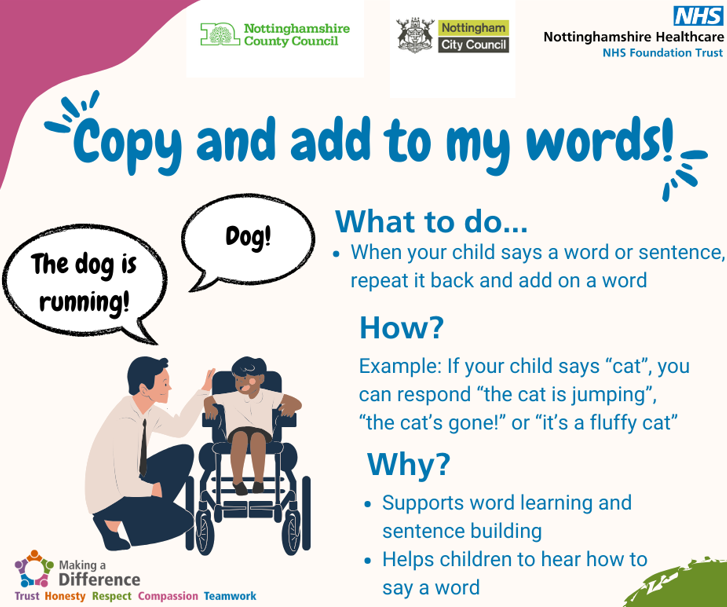
Early language development: copy and add to my words
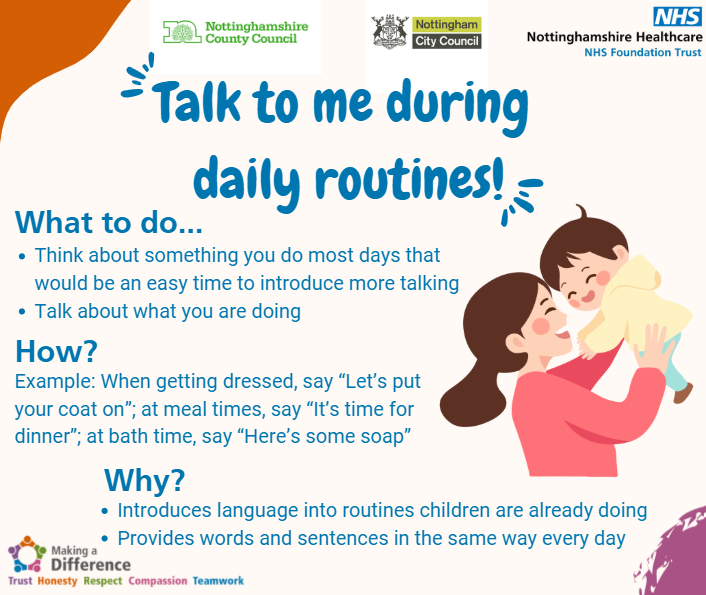
Early language development: Talk to me during daily routines
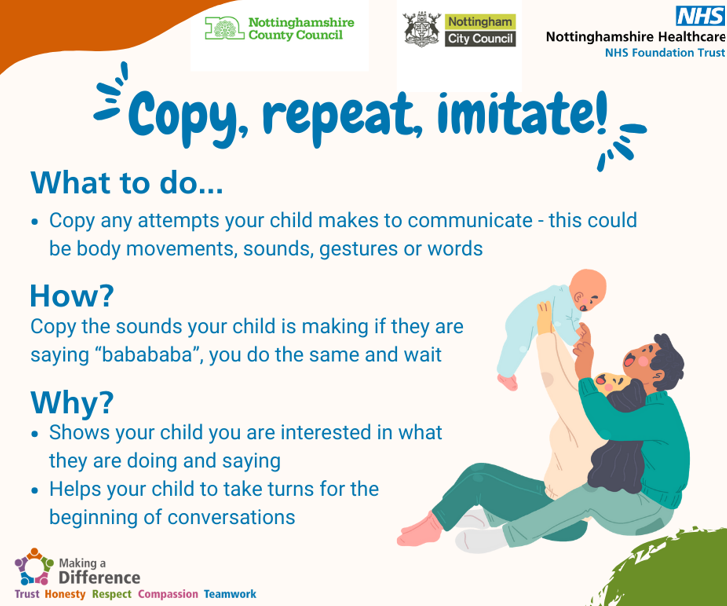
Early language development: copy, repeat, imitate
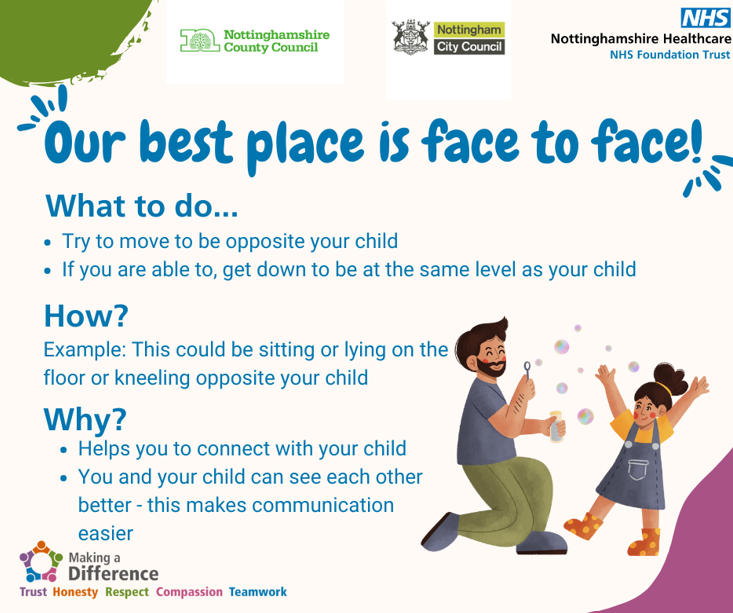
Early language development: our best place is face to face
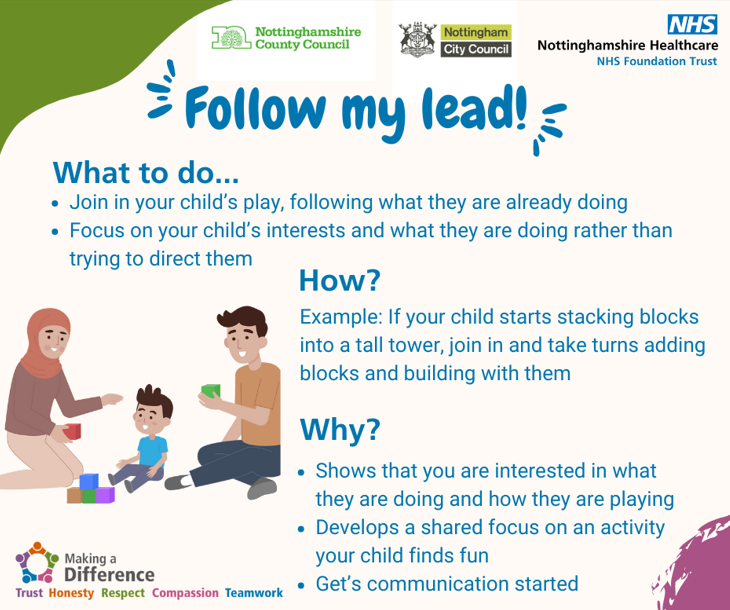
Early language development: follow my lead
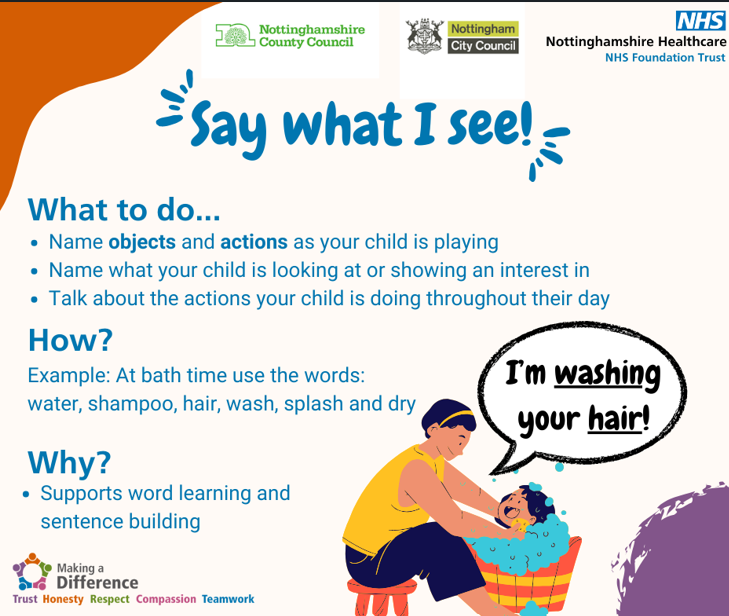
Early language development: say what I see
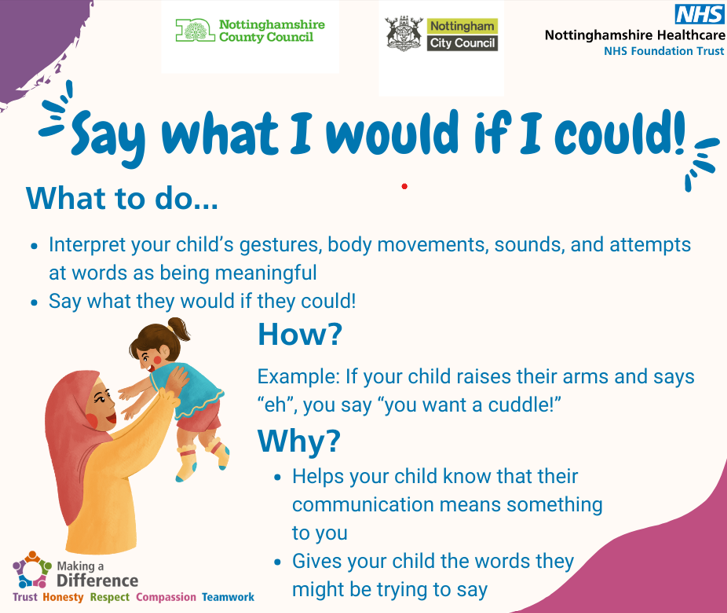
Early language development: say what I would if I could
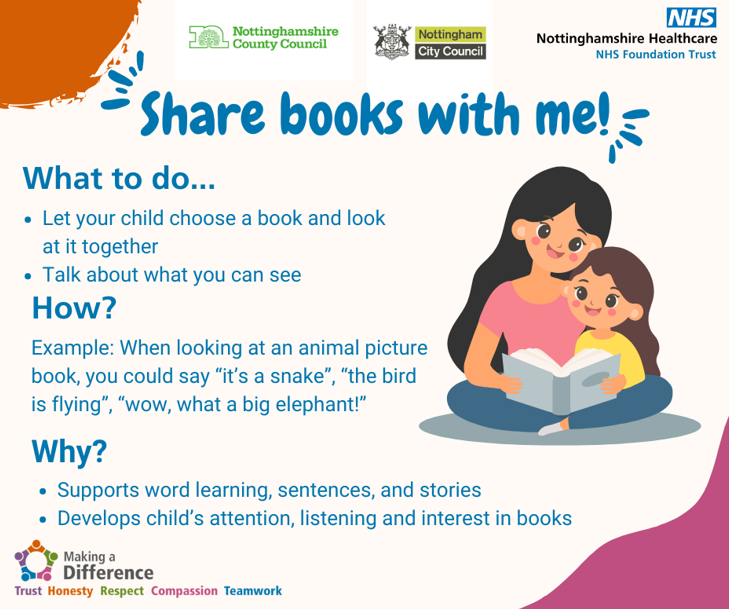
Early language development: share books with me
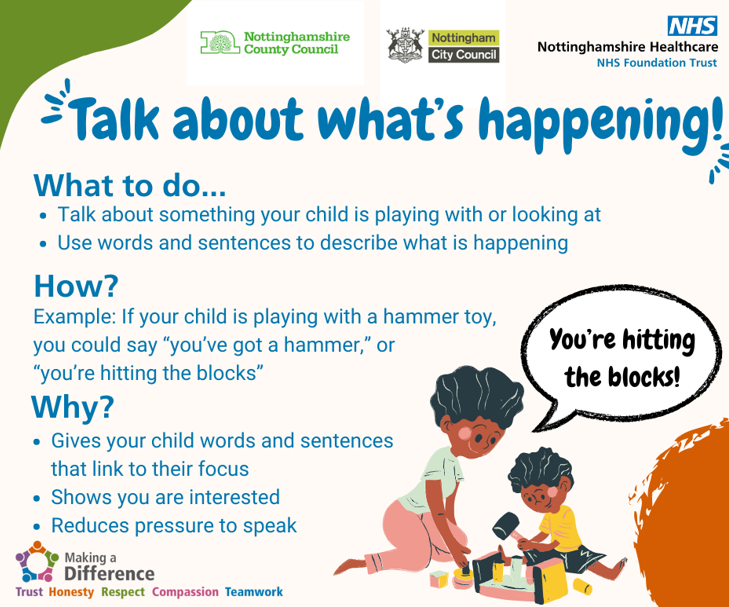
Early language development: talk about what's happening
The benefits of multilingualism in the family
Using signs to support language and communication
Supporting early language development